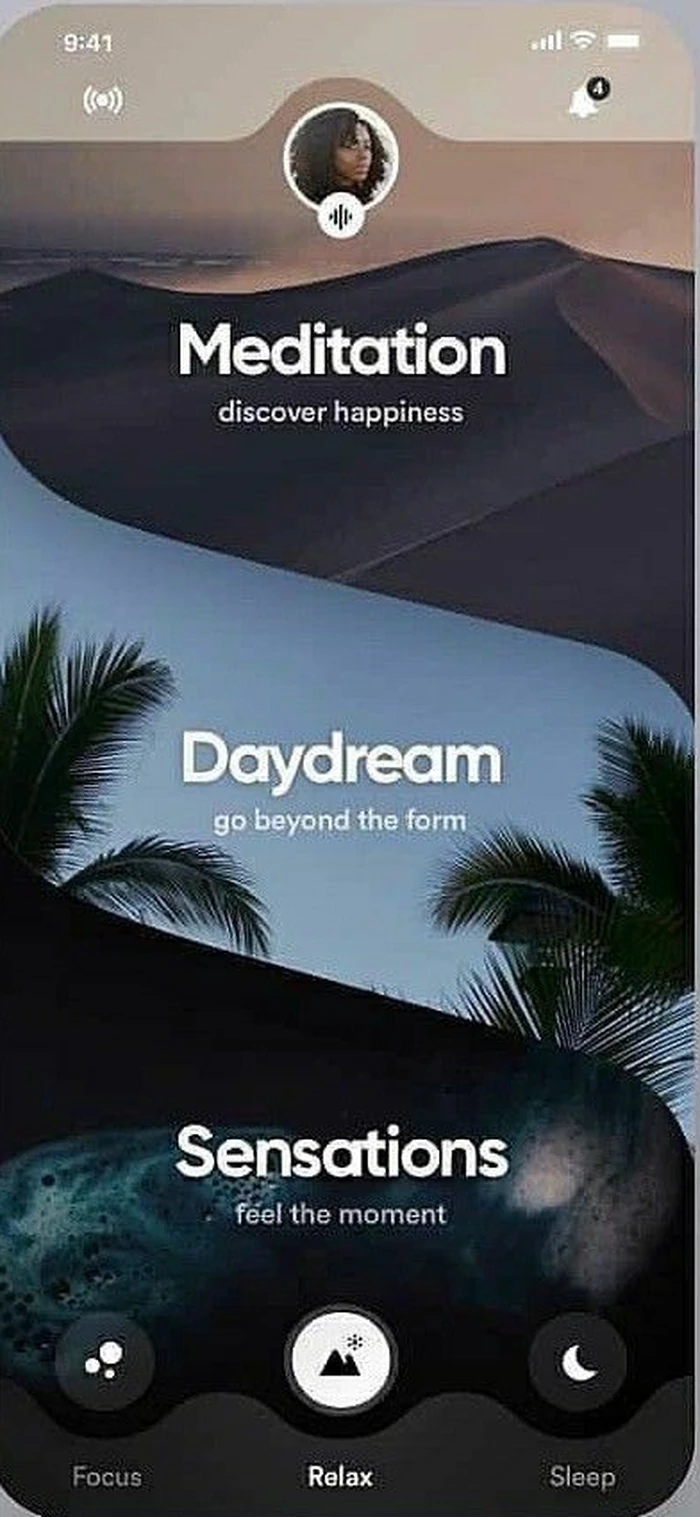
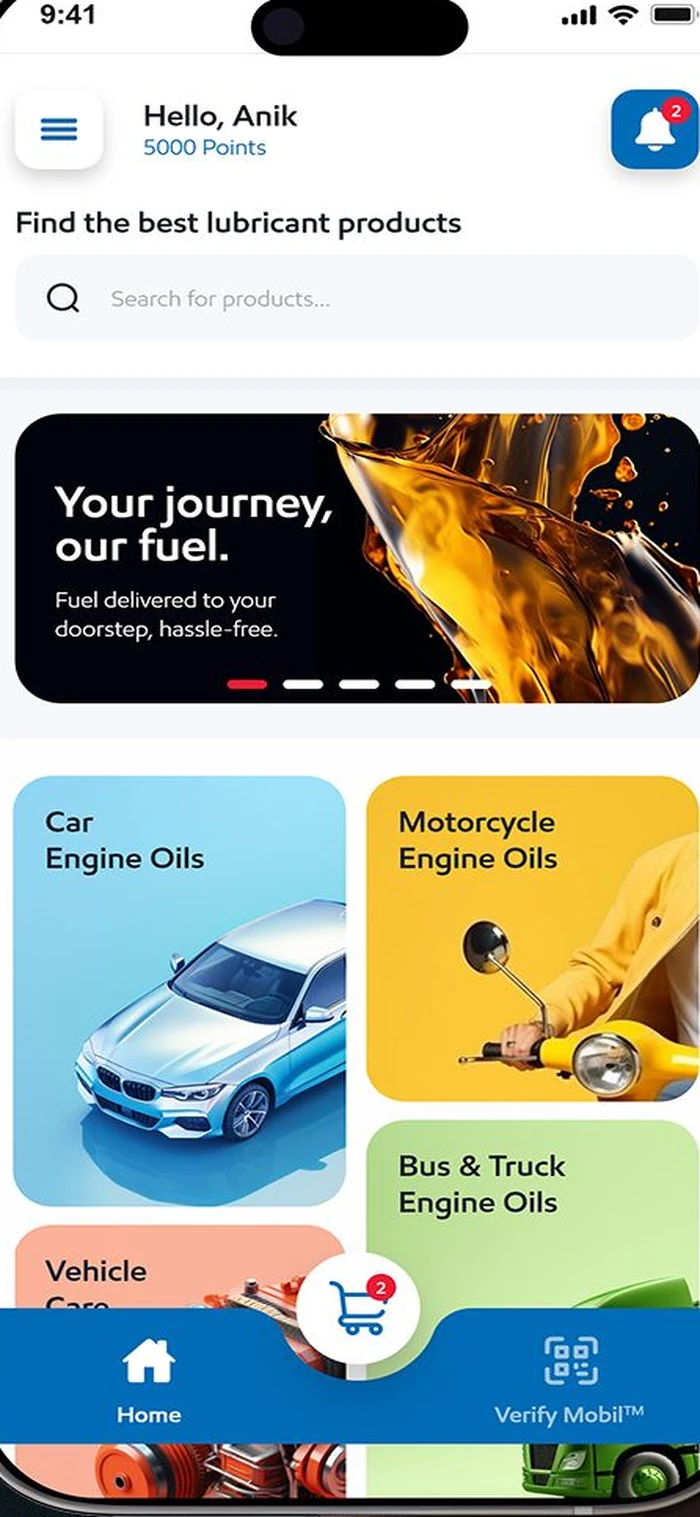
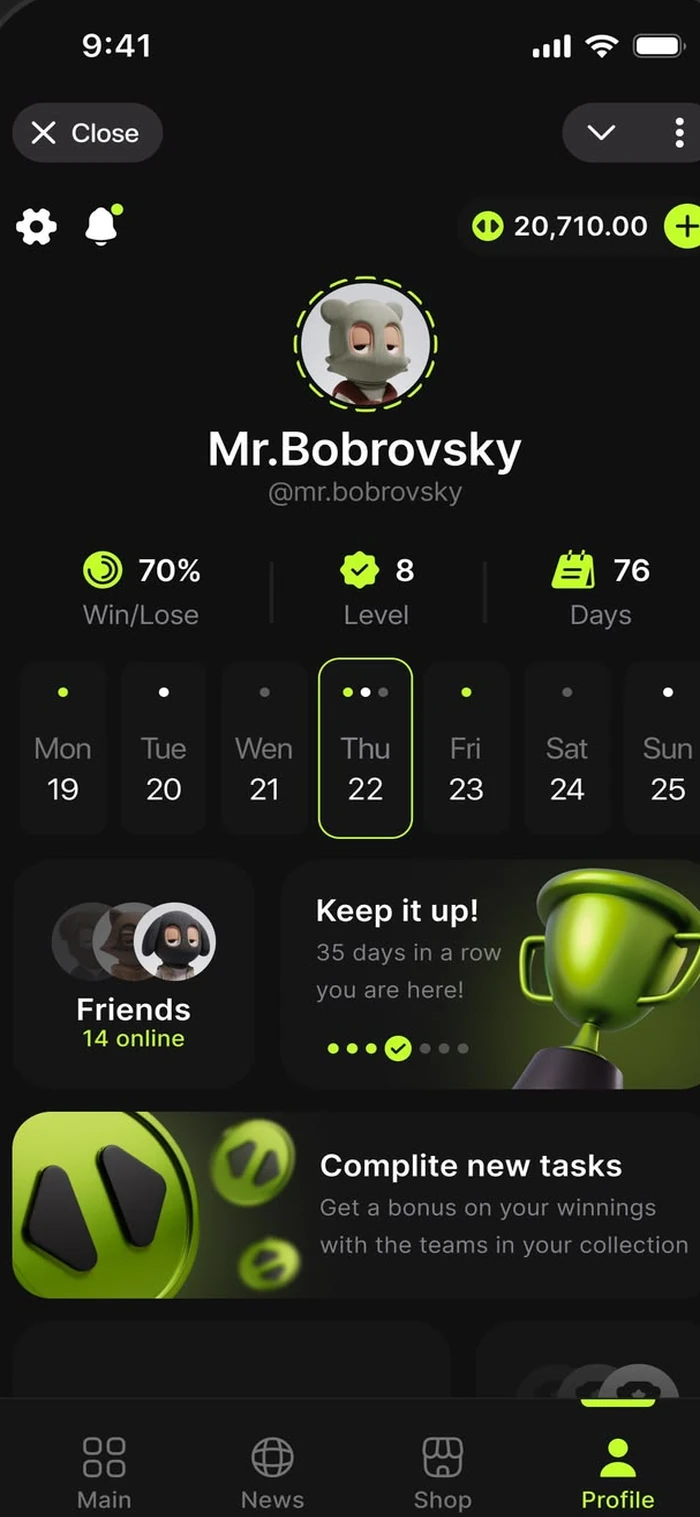
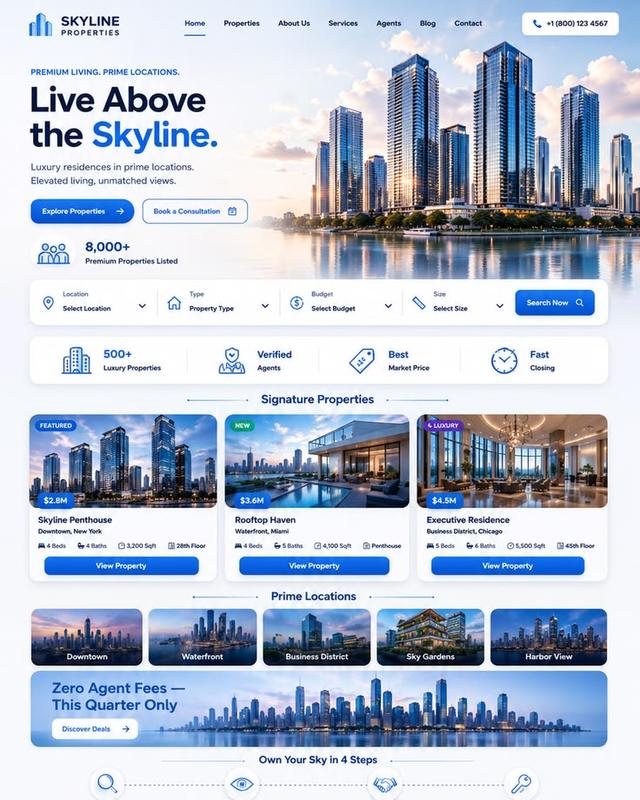
"How much does it cost to build a mobile app?" is the very first question almost every founder, brokerage, and business owner asks — and the honest answer is always a range, not a number. This guide breaks down exactly what drives that range, what you should expect to pay in 2026, and how to avoid the two most expensive mistakes: underbuilding and overbuilding.
Before we get into numbers: every legitimate development company will tell you the same thing we're about to. Cost depends on scope, not on the calendar year. An app is not one product — it's a category that spans a simple booking tool and a multi-sided marketplace with real-time matching, and those two projects can differ in cost by a factor of ten.
Mobile app development cost by project type
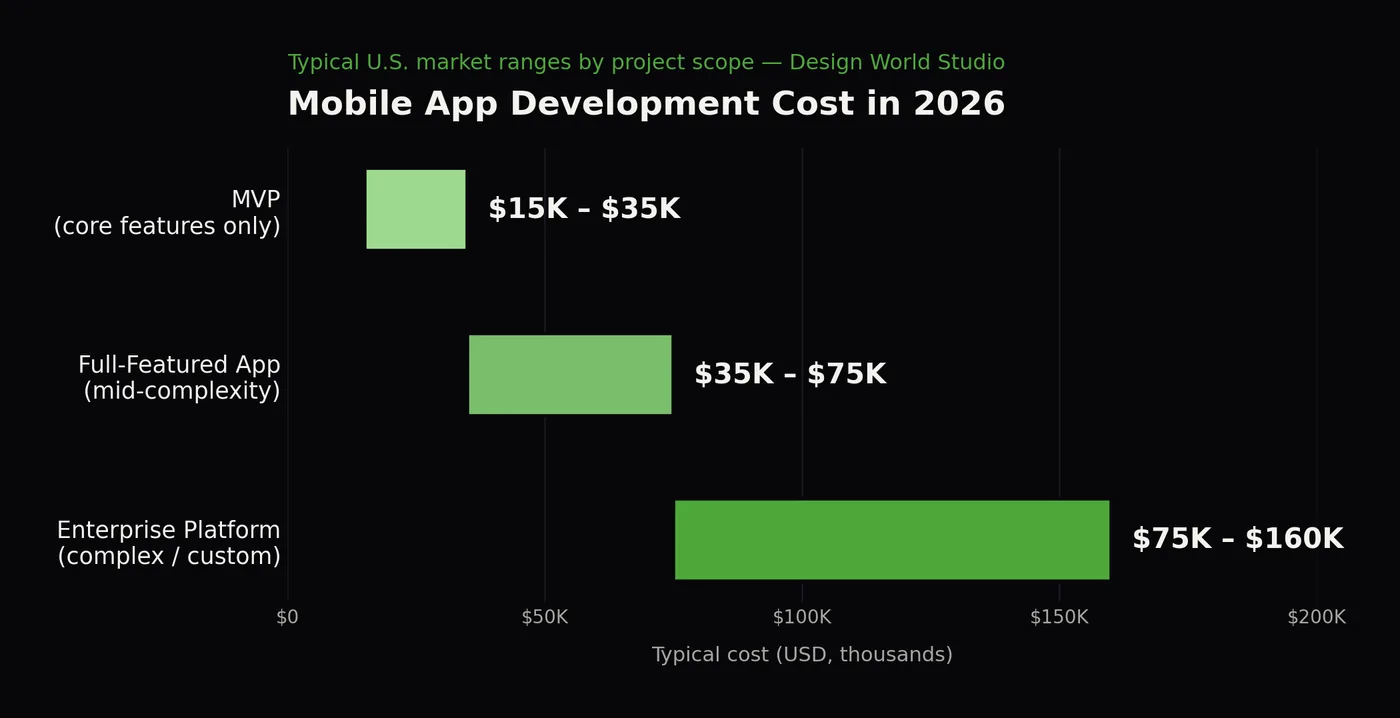
Based on what we and most established US development studios actually quote in 2026, here's the realistic breakdown:
- MVP (minimum viable product) — $15,000 to $35,000. Core screens, basic user accounts, one or two central features, simple design. Built to test an idea with real users before investing further. Typical timeline: 6–10 weeks.
- Full-featured app — $35,000 to $75,000. Custom UI/UX design, backend and database architecture, third-party integrations (payments, maps, push notifications), user accounts and roles, and polished native or cross-platform performance. Typical timeline: 3–5 months.
- Enterprise / complex platform — $75,000 to $160,000+. AI-powered features, real-time data sync, multi-sided marketplaces, advanced admin dashboards, complex third-party or legacy-system integrations, and enterprise-grade security and compliance. Typical timeline: 6–12+ months.
If a quote you've received falls dramatically outside these ranges in either direction, that's worth a second look — a price far below market usually means offshore outsourcing with limited communication and revision cycles, and a price far above it usually means you're paying for scope you don't actually need yet.
What actually drives the cost up or down
- Number of screens and user flows. Every additional screen means more design time, more edge cases, and more QA. A 10-screen app and a 40-screen app are simply different projects.
- Backend complexity. An app that only displays static content is cheap. An app with real-time data, user-generated content, or complex business logic needs a real backend team and architecture — that's where cost concentrates.
- Native vs. cross-platform. Building separately for iOS and Android roughly doubles engineering cost. A single cross-platform codebase (the right choice for the large majority of business apps) delivers both platforms from one team.
- Third-party integrations. Payments, CRM sync, mapping, AI APIs, and analytics all add real integration and testing time — usually underestimated in early budgets.
- Design maturity. Starting from a rough idea costs more than starting from validated wireframes, since design decisions get made (and re-made) during development instead of before it.
- Post-launch support. A launched app isn't finished — bug fixes, OS updates, and iteration typically run 15–20% of the original build cost per year, and should be budgeted from day one, not treated as a surprise.
Hidden costs founders forget to budget for
Beyond the development quote itself, a few line items catch first-time app owners off guard: Apple Developer Program and Google Play Console fees (roughly $99/year and a $25 one-time fee), backend hosting and server costs that scale with usage, push notification and analytics service fees, and App Store optimization or marketing spend to actually get users once the app is live. None of these are large individually, but they add up to real ongoing cost beyond the initial build.
Frequently asked questions
How much does it cost to build a simple app?
A simple, single-purpose app with basic functionality typically costs $15,000–$30,000 and takes 6–10 weeks when scoped as a true MVP with a tight, prioritized feature list.
Is it cheaper to build for one platform first?
Not usually, if you use a cross-platform framework — you get both iOS and Android from the same codebase for close to the cost of building one native app, which is why most new business apps in 2026 skip the "iOS first" debate entirely.
Why do app development quotes vary so much between companies?
Because "build me an app" is not a fixed scope — one company may quote a bare MVP while another quotes a fully custom platform with AI features, without either number being wrong. The fix is to get a detailed, feature-by-feature scope from every company you're comparing, not just a bottom-line number.
Should I build an MVP first or go straight to the full version?
For the large majority of new products, yes — an MVP validates that people actually want what you're building before you spend the full budget, and the data from real users almost always changes at least part of the original plan.
How we price mobile app development
We scope every project against your actual feature list and growth plan, not a generic package price — which is why we can build anything from a focused MVP to a full AI-powered platform like CrewIQ or ZipTrip. If you want a real number instead of a range, tell us what you're building and we'll give you a scoped estimate, not a guess.