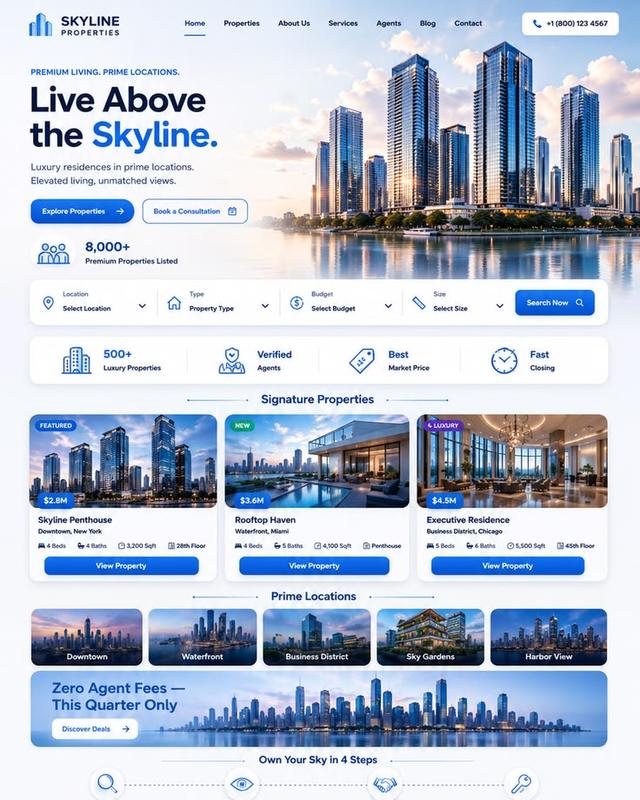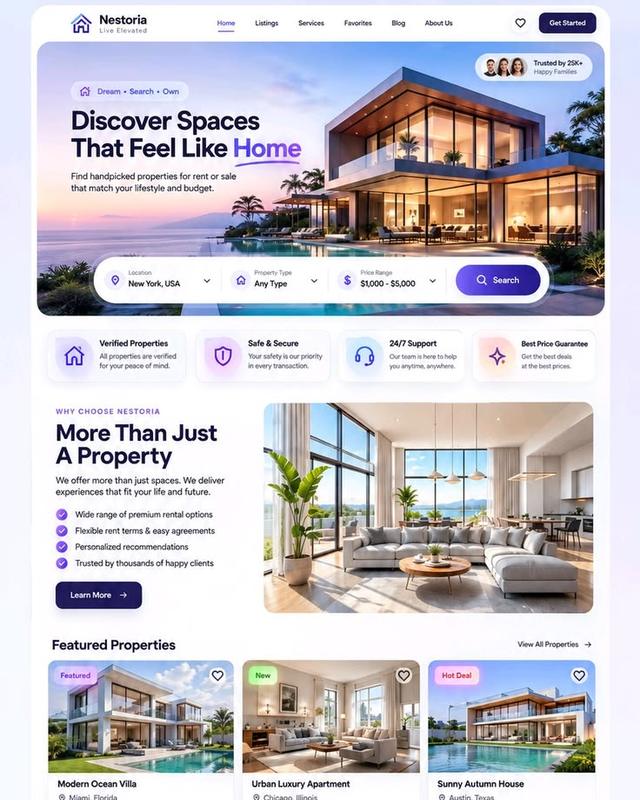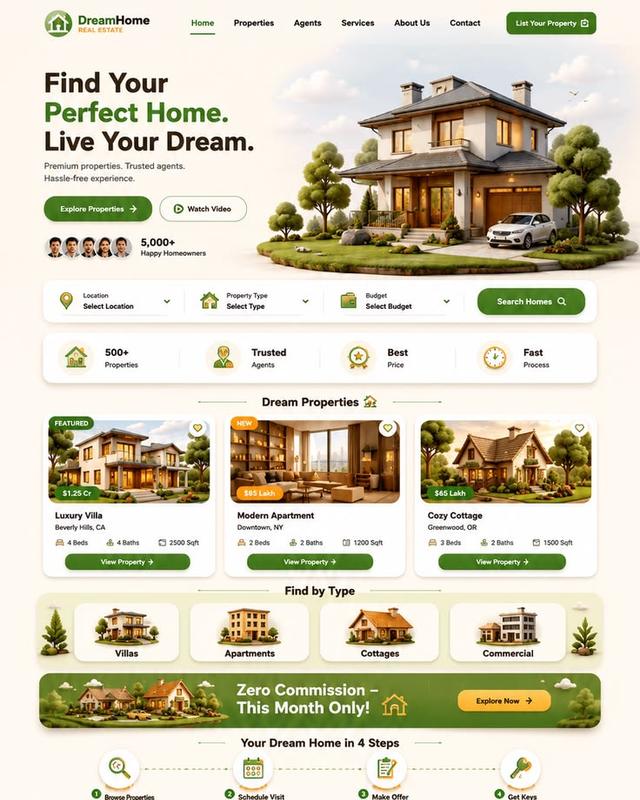


The real estate industry is not short on software. It is short on software that actually works together. Most brokerages in 2026 are running a CRM that doesn't talk to their website, a website that doesn't feed their app, an app nobody opens, and a marketing budget pouring leads into a funnel that leaks at every joint. This guide breaks down the four PropTech solutions that actually move revenue — AI agentic systems, mobile apps, websites, and marketing — and how they compound when one team builds them as a single system.
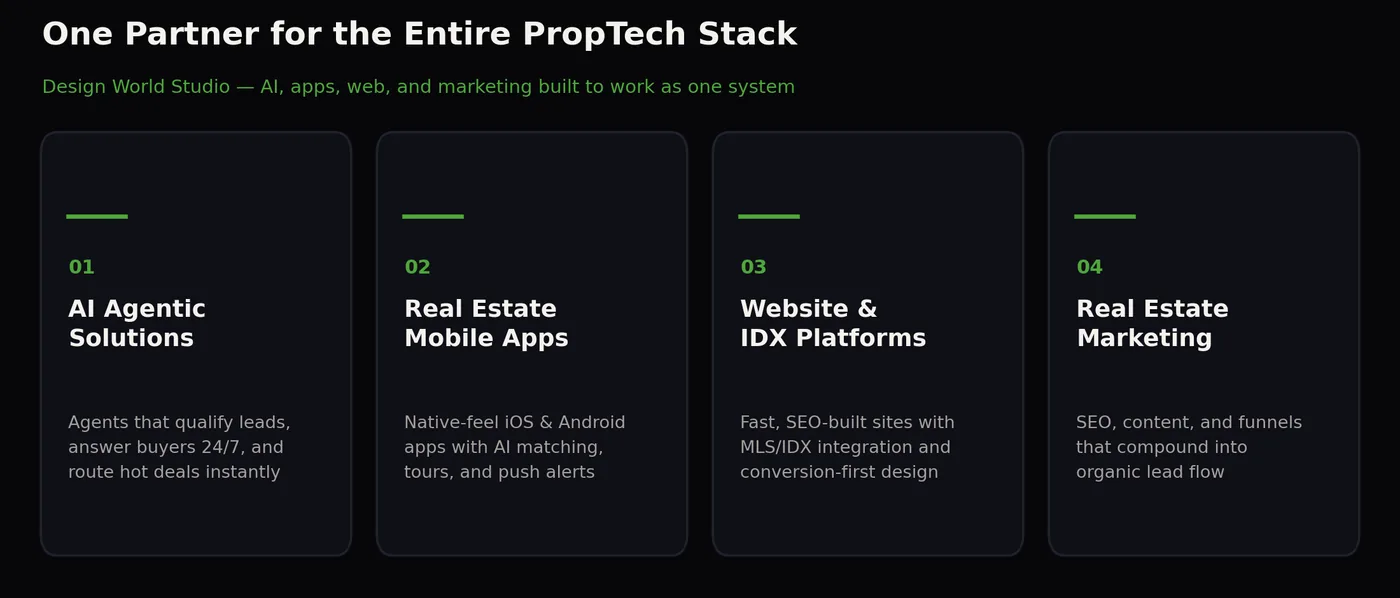
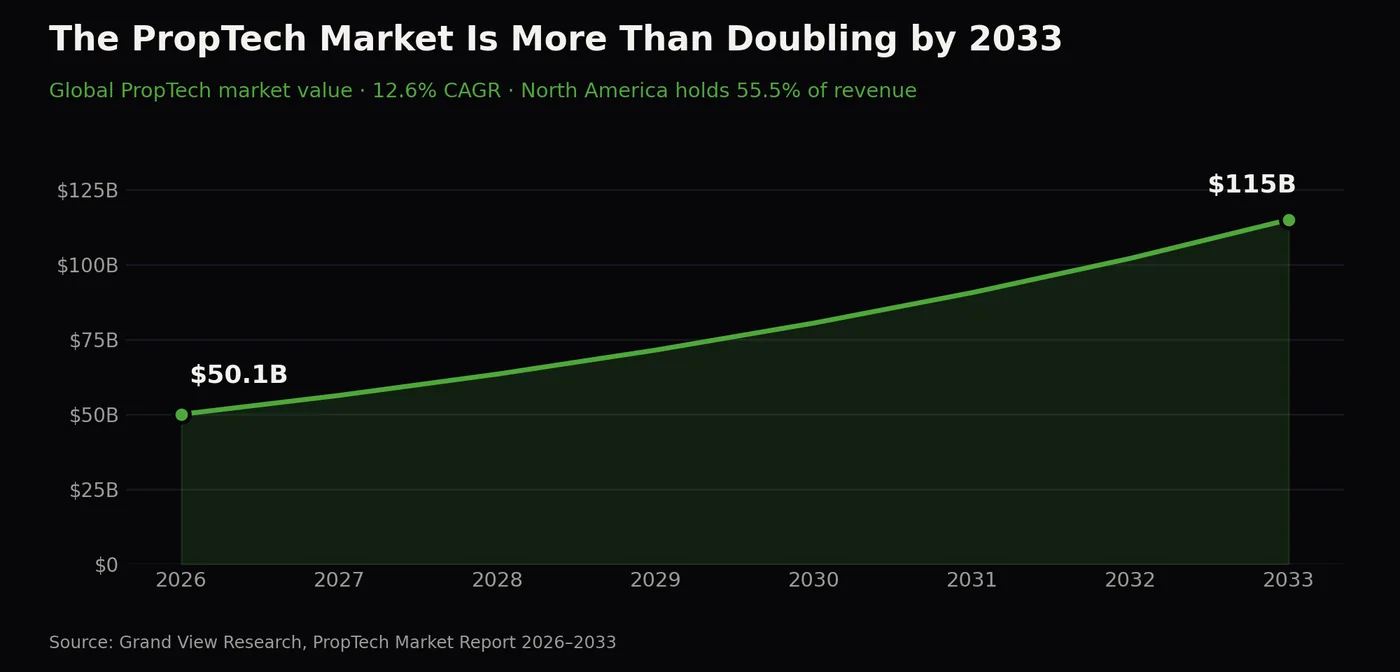
The PropTech market is worth roughly $50.1 billion in 2026 and is forecast to reach $115 billion by 2033 — a 12.6% compound annual growth rate, with North America alone holding 55.5% of global revenue. That capital is not flowing into digital brochures. It is flowing into systems that respond faster, match better, and follow up without a human remembering to.
Why 2026 is the year the gap widens
Something has quietly changed in real estate technology, and it isn't the software — it's the speed of the customer. Buyers now expect the same responsiveness from a brokerage that they get from Amazon or Uber. The data on what that costs agencies who can't deliver it is brutal:
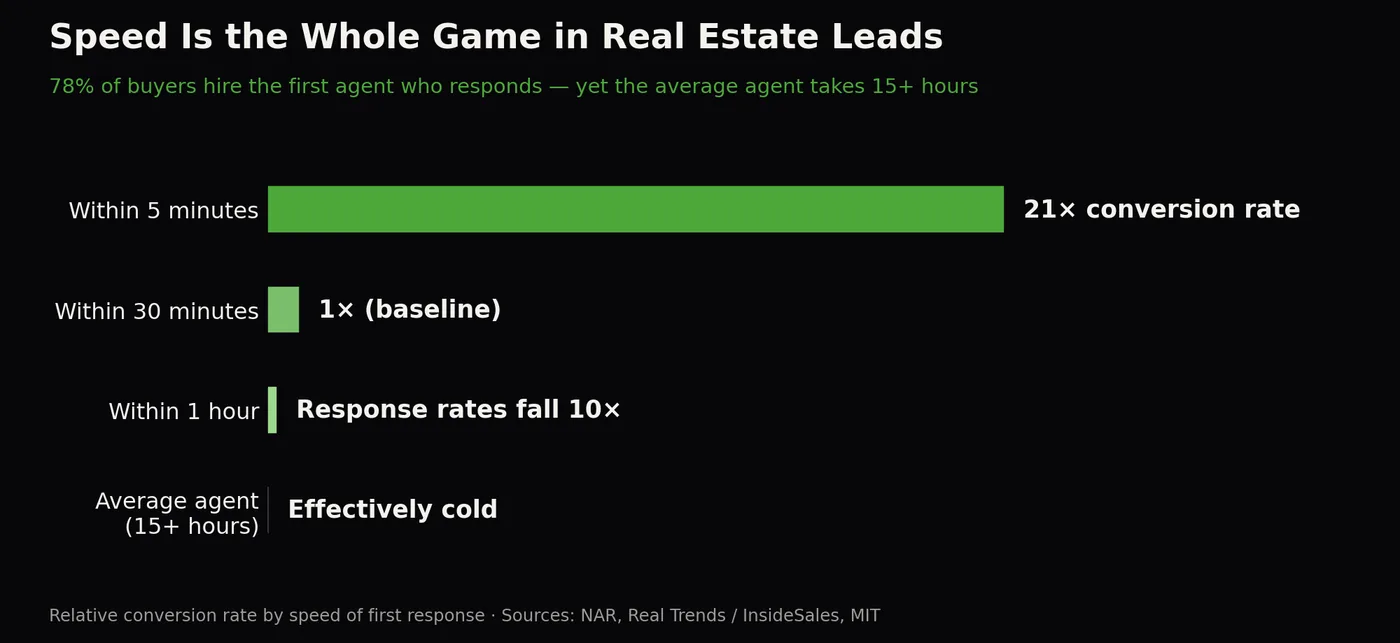
- 78% of homebuyers work with the first agent who responds to their inquiry. Not the best agent. Not the cheapest. The first one. (NAR)
- Responding within 5 minutes converts 21× better than responding within 30 minutes. The window is not a day or an hour — it's minutes. (Real Trends / InsideSales)
- The average agent takes over 15 hours to respond. By then, response rates have already fallen by a factor of ten. (Inman, MIT)
- 44% of agents give up after a single follow-up attempt — yet leads that receive six or more touchpoints convert 70% better.
- Each missed lead represents roughly $7,500 in lost commission. Ten missed leads a month is a $900,000 annual problem.
Read those numbers together and a conclusion becomes hard to avoid: the biggest revenue leak in most real estate businesses is not lead generation. It is what happens in the first five minutes after a lead arrives — and no human team, however good, is awake and available for every inquiry at 11pm on a Sunday. That is precisely the problem agentic AI was built to solve.
1. AI agentic solutions: the layer that never sleeps
Most "AI in real estate" conversations in 2026 are still stuck on chatbots that answer FAQs. That is not what agentic AI means. An AI agent is a system that doesn't just reply — it takes actions on your behalf: qualifying a lead, checking availability, booking a showing, updating the CRM, and escalating to a human the moment a conversation becomes worth a human's time.
What AI agents actually do for a brokerage
- Instant lead qualification, 24/7. An agent engages every new inquiry within seconds — nights, weekends, holidays — asking the qualifying questions a good agent would (budget, timeline, financing status, area) and scoring the lead before a human ever opens their laptop.
- Automated, persistent follow-up. The 44%-give-up-after-one-attempt problem disappears when follow-up is systematic rather than remembered. Agents run the six-plus touchpoint sequence that converts 70% better, and stop the moment a human takes over.
- Intelligent routing. Hot leads go straight to the right agent's phone with full context attached. Cold or unqualified inquiries get nurtured automatically instead of consuming a salesperson's afternoon.
- Property matching that learns. Rather than filtering by static criteria, agents learn from what a buyer actually clicks, saves, and lingers on — surfacing listings the buyer didn't know to search for.
- Document and transaction assistance. Agents draft disclosures, chase missing signatures, flag deadlines, and keep transactions from stalling in the gap between "offer accepted" and "closed."
- Market intelligence on demand. Investor and multi-property clients get instant answers on comps, yields, and trends instead of waiting for a manually prepared report.
Where AI agents should not be used
An honest word, because overselling this is how PropTech projects fail: AI agents should not negotiate on your behalf, should not give legal or financial advice, and should not pretend to be human. The highest-performing implementations we build are explicit about being AI, handle the first-response and qualification layer brilliantly, and hand off to a named human early. The goal is not replacing your agents — it's making sure a human is talking to every lead worth talking to, instead of losing three out of four before anyone picks up the phone.
2. Real estate mobile app solutions
Mobile is where property search actually happens. The overwhelming majority of home searches now begin on a phone, and a "mobile experience" that is just a shrunk-down website is a competitive liability rather than a feature. But a real estate app only earns its cost if it does something a browser tab cannot.
The features that make an app worth building
- Push notifications for new and price-changed listings. This is the single highest-ROI feature in the category — it's the reason a user opens your app instead of drifting back to Zillow.
- AI-powered recommendations that adapt to behavior, not just saved search filters.
- Immersive 3D and virtual tours — increasingly the deciding factor for out-of-state and investor buyers who won't visit before shortlisting.
- Map-based search with neighborhood, school, and commute data layered into the map itself rather than buried in a separate tab.
- In-app messaging and video calls with agents, keeping the relationship — and the data — inside your platform.
- Secure document handling and e-signing, removing the biggest friction point in closing on mobile.
- Deep CRM integration so every saved search, tour request, and message lands in your agents' existing workflow automatically.
On cost: a focused MVP typically runs $15,000–$35,000 and ships in 6–10 weeks; a full-featured platform with AI matching and integrations lands in the $35,000–$75,000 range. We covered the full breakdown in our guide to mobile app development cost in 2026.
3. Real estate website development solutions
Your website is the only asset in this list that works while you sleep and compounds in value over time. It's also the one most brokerages under-build — usually because they treat it as a brochure rather than as the top of the funnel that every other channel feeds into.
What a revenue-generating real estate website requires
- IDX/MLS integration that doesn't feel bolted on. Most IDX widgets load in an iframe that Google can't index and users find slow. Properly integrated listings are fast, searchable, and each property gets a real, indexable URL — which is what lets a listing page rank at all.
- Speed as a first-class requirement. Core Web Vitals are a ranking factor and a conversion factor simultaneously. A site that takes five seconds to become usable on a phone loses both traffic and the visitors it does get.
- Conversion architecture, not just contact forms. Valuation tools, saved searches, gated market reports, and mortgage calculators capture visitors who aren't ready to call yet — which is most of them.
- Programmatic location pages. Neighborhood, city, and property-type pages built systematically are how brokerages capture the long tail of "homes for sale in [neighborhood]" searches that individually look small and collectively dominate organic traffic.
- Structured data markup. Schema for listings, organization, and FAQs is what makes Google display rich results instead of a plain blue link.
- CRM and lead routing wired in from day one, so a form submission triggers the AI agent layer within seconds rather than sitting in an inbox.
4. Real estate marketing solutions that compound
Paid advertising rents attention. Every month you stop paying, the leads stop arriving. Organic marketing builds an asset that keeps producing — and in a market where the average agent's cost per lead keeps climbing, that difference decides who is still profitable in three years.
The channels that actually work for real estate in 2026
- Local and neighborhood SEO. Ranking for "[neighborhood] homes for sale" and "[city] real estate agent" is less competitive than national terms and converts far better, because the intent is unambiguous.
- Content that answers real buying questions. Cost guides, market reports, neighborhood breakdowns, and process explainers capture searchers months before they're ready to transact — and they remember who answered them.
- Google Business Profile optimization. For local search, this is often higher-leverage than anything on your website, and most brokerages leave it half-filled.
- Search visibility inside AI answers. An increasing share of buyers now start with an AI assistant rather than a search box. Being the source those systems cite requires clearly structured, factual, well-marked-up content — the same work that earns rich results in Google.
- Email nurture tied to behavior. A buyer who viewed four listings in one neighborhood should get a different email than one who read a single blog post. This is where the AI agent layer and marketing stack overlap.
- Retargeting with real segmentation, so budget follows the visitors who showed genuine intent instead of everyone who bounced.
Why these four only work as one system
Here is the part most vendors won't tell you, because most vendors only sell one of the four: buying these separately is where the money leaks.
Marketing drives traffic to a website that wasn't built to convert it. The website captures a lead into a CRM the app can't read. The app sends a notification the AI agent doesn't know about, so the buyer gets contacted twice about the same property — or not at all. Each vendor's dashboard shows their piece performing fine. The revenue still doesn't arrive.
When one team builds all four, the compounding runs the other direction. Marketing brings a buyer to a fast, indexable listing page. The page captures them in one click. The AI agent engages within seconds, qualifies them, and books a showing. The app keeps them engaged with push alerts on matching listings. Every interaction feeds the same data layer, so the recommendations get sharper and the routing gets smarter. That is what a PropTech system looks like, as opposed to four PropTech purchases.
Frequently asked questions
What is PropTech?
PropTech (property technology) is software and digital infrastructure built specifically for the real estate industry — covering property search and listings, transaction management, AI-driven lead handling, property management, and investment analytics. The global market is projected to grow from roughly $50 billion in 2026 to $115 billion by 2033.
What are AI agents in real estate, and how are they different from chatbots?
A chatbot answers questions. An AI agent takes actions — it qualifies a lead against your criteria, books showings on a real calendar, updates your CRM, runs multi-step follow-up sequences, and escalates to a human when a conversation warrants it. The practical difference shows up in the response-time data: agents close the gap between a lead arriving and a meaningful first response from hours to seconds.
How much does a full PropTech solution cost?
It depends entirely on which pieces you need. A focused mobile app MVP starts around $15,000; a full-featured app runs $35,000–$75,000; a custom website with IDX integration and conversion architecture typically falls between those; and an AI agent layer is scoped against how many workflows it automates. Most brokerages start with the single highest-leverage piece — usually the AI response layer or the website — and build outward from there rather than buying everything at once.
Do I need a mobile app if I already have a good website?
Not always. If your traffic is mostly search-driven and transactional, a fast, well-built website with strong conversion architecture may deliver better returns per dollar than an app. An app earns its cost when you need repeat engagement — push notifications for new listings, an investor or tenant portal, or an audience that returns weekly rather than once every seven years.
How long does it take to see results from real estate SEO?
Realistically, three to six months before meaningful organic traffic arrives, and longer for competitive terms. That lag is exactly why it's worth starting now rather than after paid channels get too expensive — the compounding only begins once the content exists and is indexed.
Can AI agents work with my existing CRM?
In most cases, yes. The major real estate CRMs expose APIs that allow an agent layer to read and write leads, notes, and activity. Integration effort varies by platform, and it's the first thing worth checking before scoping any AI project — an agent that can't write back to your system of record creates more work than it removes.
Building your PropTech stack with Design World Studio
We build all four layers — AI agentic systems, mobile apps, websites, and the marketing engine that feeds them — which means we can scope your project around what actually moves your revenue instead of around what we happen to sell.
We've shipped exactly this kind of system: Unbroken Investing, an AI-matched real estate investment platform that tracks deals from lead to close, and CrewIQ, an AI-powered workforce platform built on the same matching and routing architecture that real estate lead handling requires. Both started from the same question every brokerage eventually asks — how do we stop losing the leads we already paid for?
If you're weighing where to start, the honest answer is usually: whichever layer is currently leaking the most. For most brokerages we talk to, that's the first five minutes after a lead arrives. Tell us what your funnel looks like and we'll tell you where we'd start — and where we wouldn't.